G28 vs G30 Mabati: Which Gauge Should You Buy
Choosing the wrong mabati gauge can turn a short-term saving into a long-term repair bill. G28 and G30 sheets look almost identical in the store, yet they perform very differently under the weight of heavy rain, hail, and the expansion cycles that Kenyan weather demands. Knowing which gauge suits your roof pitch, span, and budget means you buy once and buy right.
Get the best roofing sheets prices in Kenya
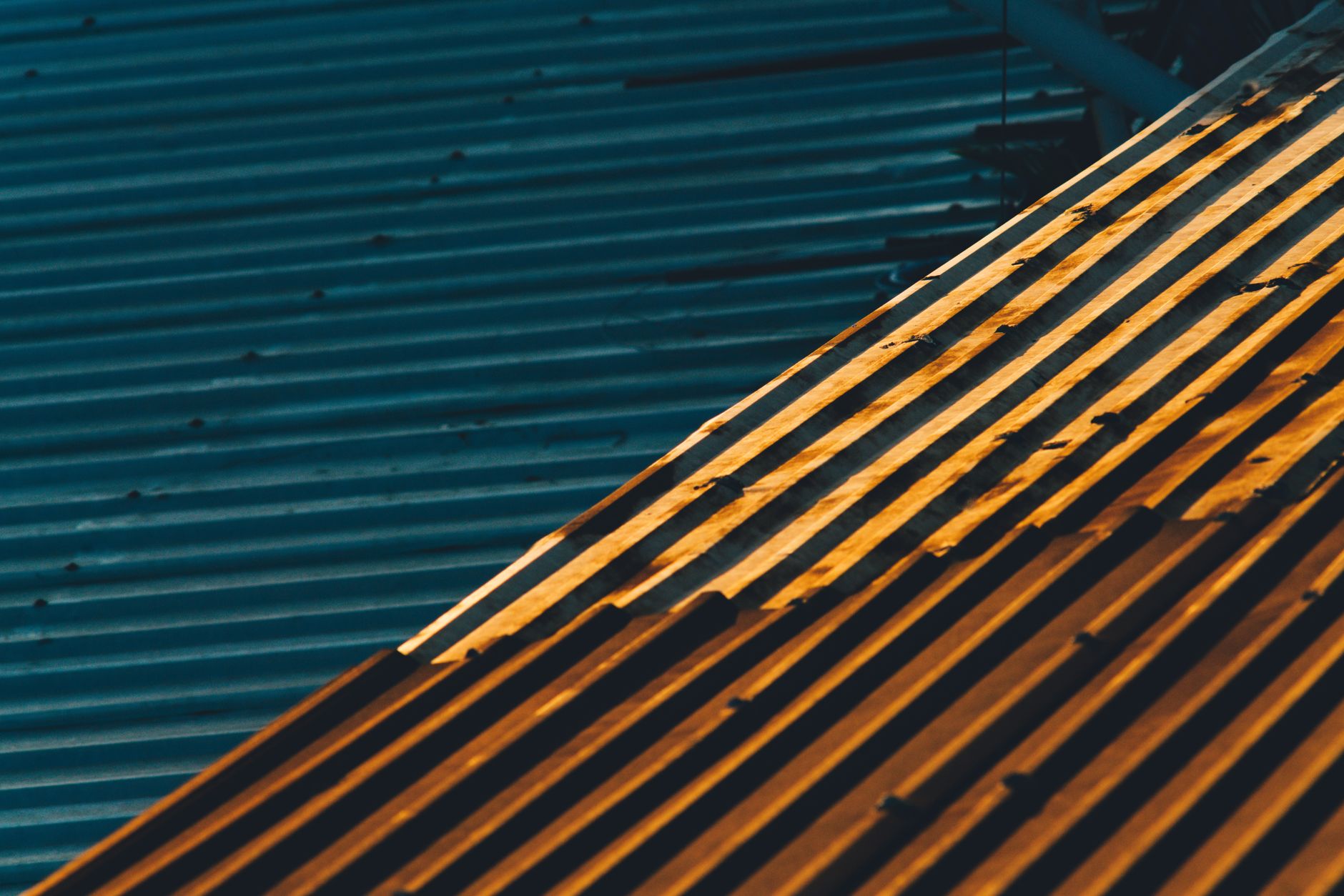
When you walk into a mabati store in Kenya and ask for roofing sheets, one of the first questions you will face is the gauge. Most people point at a stack, ask for a price, and move on, but the gauge number printed on that sheet is one of the most consequential decisions in your entire roofing project. The debate around g28 vs g30 mabati gauge kenya comes up constantly among homebuilders, contractors, and quantity surveyors, and for good reason: the wrong choice can cost you far more in repairs than you ever saved at the point of purchase. If you have already been reading about mabati colours in kenya and prices for roofing projects, you have probably seen gauge mentioned without a full explanation of what the numbers actually mean in practice. This post goes deeper than a price list, and by the time you finish reading, you will be able to look at your specific project, your location in Kenya, and your budget, and make a confident, informed decision between G28 and G30.
Understanding Mabati Gauge Numbers
The gauge number on a roofing sheet is a measure of thickness, but it works in a way that confuses almost every first-time buyer. A higher gauge number means a thinner sheet, not a thicker one, because the gauge system was originally based on the number of passes a steel strip took through a rolling mill, so more passes produced thinner material and a higher gauge number. In Kenya's roofing market, G28 and G30 are the two most commonly stocked gauges, with G28 being the thicker of the two. Understanding this counterintuitive system is the first step to reading any supplier's product sheet correctly, and it immediately explains why so many buyers make costly mistakes when shopping on price alone.
In practical millimetre terms, G28 steel roofing sheet sits at approximately 0.40 mm to 0.45 mm of base metal thickness, while G30 sits at roughly 0.30 mm to 0.35 mm. These differences look small on paper but translate into meaningful differences in weight, rigidity, and long-term performance. A single sheet of G28 corrugated mabati will feel noticeably heavier and stiffer than the same profile in G30. Your structural timber or steel frame needs to account for that additional weight, especially across longer spans, so gauge selection and structural design are decisions that should be made together rather than in isolation.
Gauge matters more than most buyers initially appreciate because it affects not just strength but also the way a roof behaves over time. A thinner sheet will flex more under foot traffic during installation or maintenance, which can crack the protective coating and expose bare steel to moisture. It will also expand and contract more dramatically during Kenya's temperature swings between midday heat and cool nights. These micro-movements, repeated thousands of times over years, work fastener holes loose and create entry points for water, turning what seemed like a minor specification choice into an expensive maintenance problem. Choosing the right gauge from the start reduces these cumulative failure risks significantly and protects both the structure and the interior of the building for the long term.
G28 Mabati: Specifications and Characteristics
G28 mabati, at approximately 0.40 mm to 0.45 mm base metal thickness, is the standard workhorse of Kenya's residential construction market. A square metre of G28 corrugated or box profile sheet weighs roughly 3.5 kg to 4.0 kg depending on the finish and profile depth, and that weight gives the sheet the rigidity needed to span standard rafter spacings of 900 mm to 1,200 mm without excessive deflection under load. Most builders working on straightforward residential houses in Nairobi, Kisumu, or Eldoret will find G28 adequate for the spans and loads typical in those projects. The profile holds its geometry well during transport and installation, which means fewer damaged sheets arriving on site and less waste from deformation during handling.
The strength and load-bearing capacity of G28 is sufficient for standard pitched roofs where rafters are properly spaced and the roof sees normal rainfall without extraordinary wind exposure. It handles the weight of a person walking during installation or periodic cleaning without permanent deformation, provided installers use boards or crawl planks rather than stepping directly between rafters. G28 also performs well with the full range of mabati profiles available in Kenya, from corrugated to box profile to stone-coated tile styles, because the gauge supports the profile geometry without distortion during rolling. It is not a lightweight compromise but a genuinely competent specification for a wide range of buildings, which is why it remains the most recommended gauge among experienced roofing contractors across the country.
With a good quality pre-painted or galvanized finish and correct installation, G28 mabati in moderate Kenyan environments typically lasts 15 to 25 years before significant rust or structural fatigue becomes a concern. Proper maintenance matters here: clearing debris from valleys, checking fastener tightness every few years, and touching up any scratched paintwork all extend that lifespan meaningfully. In drier inland areas like Machakos or Laikipia, G28 often reaches the upper end of that range without issue. Coastal or high-rainfall areas accelerate corrosion on any gauge, but G28 shows its limits later than G30 under those conditions, giving the property owner more time before replacement becomes necessary.
G28 vs G30 Mabati Gauge Kenya: Why Heavier Gauge Matters
G30 mabati, at approximately 0.30 mm to 0.35 mm, is thinner than G28, and that thinner specification means it offers less structural rigidity, lower load-bearing capacity, and faster corrosion once the protective coating is compromised. A G30 sheet will flex noticeably when held at one end unsupported, while a G28 sheet of the same profile holds its shape with far more confidence. This physical difference is not just a technical curiosity; it determines how the roof performs under the combined stresses of wind uplift, rain load, and thermal movement year after year. For a quick, low-cost shade structure or a temporary store, G30 can serve its purpose, but for any permanent building where durability is a priority, the specification deserves careful thought before any purchase is made.
The durability gap between G28 and G30 becomes most visible over a ten-year period. A G30 sheet with a compromised coating will begin showing rust spotting sooner because the thinner base metal provides less time between initial corrosion and through-rust that causes leaks. In regions with high humidity or acid rain influence from traffic and industrial activity, that timeline shortens further, and the property owner faces replacement costs long before they had anticipated. Replacing roofing sheets on a standing building is a significant cost that includes not just materials but also labour, scaffolding, and disruption to the occupants. A G28 roof that lasts 20 years without replacement is almost always cheaper in total than a G30 roof replaced at 12 years.
Wind and impact resistance also favour the heavier gauge in meaningful ways. Kenya's weather patterns include hailstorms in highland areas, strong afternoon winds on the Rift Valley floor, and coastal gales that test roofing fixings repeatedly every rainy season. A thicker sheet distributes point impact from hail more effectively, reducing the denting that cracks protective coatings and starts the corrosion cycle. It also resists the drumming vibration that loosens fasteners over time under repeated wind gusts. For permanent structures in exposed locations, G28 is almost always the specification that professional roofing contractors recommend, and the price premium over G30 is smaller than most buyers expect once they compare actual market quotes side by side.
Comparing Performance in Kenyan Conditions
Kenya's climate is not uniform, and where your building sits in the country changes which gauge makes the most practical sense. The coast, including Mombasa, Malindi, and Lamu, brings salt-laden humidity that accelerates steel corrosion on any grade of mabati. In those environments, even G28 benefits from a high-quality pre-painted finish or a zinc-aluminum alloy coating rather than standard galvanizing, because the corrosive atmosphere attacks every exposed surface relentlessly. G30 in coastal conditions will show rust spotting within five to eight years in many cases, while G28 with proper coating can hold up for 15 or more years with basic maintenance. The extra metal thickness gives you a wider safety margin before corrosion becomes structural and forces early replacement.
In highland areas such as Nyeri, Limuru, and parts of the Aberdare ranges, the combination of heavy seasonal rainfall, occasional hail, and significant temperature variation between night and day creates different stresses on roofing material. Hail impact on a thin G30 sheet leaves small dents that crack the paint locally and allow rust to start at dozens of points simultaneously, turning a moderate storm into the beginning of a slow but steady deterioration. The same hailstorm on a G28 sheet may leave minor surface marks without breaking the coating. Rafter spacing decisions also interact with gauge here: if you space rafters at 1,200 mm or wider to save timber costs, G28 is strongly preferable because G30 will flex and potentially oil-can between supports under a heavy rain load.
Temperature expansion is a less discussed but real factor in roof panel performance over time. Steel expands and contracts with temperature, and Kenya's sunny days can push dark-coloured roofing sheets to surface temperatures well above 60 degrees Celsius before evening cooling brings them back toward ambient. Thinner sheets cycle through a larger proportion of their total thickness in these movements relative to thicker ones, which means fastener holes in G30 sheets experience more stress per cycle. Over ten or fifteen years, this leads to elongated fastener holes, loosening screws, and ultimately water ingress at the fixing points. G28 handles these thermal cycles more robustly, which is one reason professional roofing contractors consistently prefer it for long-term installations across all of Kenya's climate zones.
Cost Analysis and Value for Money
The price difference between G28 and G30 mabati in Kenya is real but often smaller than buyers assume. Per sheet or per square metre, G28 typically costs between 15 and 30 percent more than the equivalent G30 product in the same profile and finish. On a mid-sized house requiring, say, 80 square metres of roofing, that premium might add between Ksh 8,000 and Ksh 20,000 to the material cost depending on current market prices and the supplier. That is a meaningful number for a tight budget, but it needs to be measured against the full cost picture rather than just the day-one purchase price, because the purchase receipt is only the first of several financial events a roof will generate over its lifetime.
Total cost of ownership tells a different story from the purchase receipt alone. If a G30 roof needs partial re-sheeting at year ten and full replacement at year eighteen while a G28 roof runs for twenty-five years with only minor fastener tightening and spot paint touch-ups, the G28 roof is substantially cheaper across its lifetime. Labour costs for roofing work in Kenya have risen consistently alongside the cost of living, so any replacement job you defer by choosing a more durable gauge now is a job you avoid at tomorrow's prices. This is the calculation that experienced quantity surveyors run, and it almost always lands in favour of G28 for permanent structures where the owner intends to occupy or rent the building for many years.
There are genuine budget scenarios where G30 makes sense and where it is the honest recommendation. A temporary site office, a storage structure expected to be demolished within five years, or a low-cost shade structure for a casual use application are all situations where buying G30 and accepting a shorter lifespan is rational and financially sound. Similarly, if a project has a fixed construction budget and the choice is between G30 now or significantly delayed construction, G30 can be a reasonable bridge decision that allows work to progress. The key is to make that choice with open eyes about what you are trading, not because a cheaper sheet looks identical at the point of sale, since any visual similarity fades quickly once the sheets are exposed to Kenya's weather over several years.
Making Your Choice: Questions to Ask Yourself
Your property's location in Kenya is the first and most important filter to apply when deciding between gauges. If you are building within five kilometres of the coast, in a high-rainfall highland area above 1,500 metres, or on an exposed site on the Rift Valley floor where strong seasonal winds are common, the environment is working against any roofing material and you want as much base metal thickness as your budget allows. For sheltered sites in moderate climate zones like many Nairobi suburbs, central Rift towns, or lower-altitude inland areas, G28 is still the recommended choice, but the penalty for choosing G30 is less severe than in the high-stress locations. Understanding your microclimate and discussing it honestly with your contractor shapes every other variable in this decision.
How long you plan to keep the roof matters almost as much as where the building sits. A permanent family home that you expect to pass to the next generation, a rental property where consistent performance protects your income, or a commercial building where a leaking roof disrupts operations all justify choosing G28 without hesitation. If you are building a structure that you plan to renovate, extend, or sell within seven to ten years, the calculus shifts somewhat, though even in that case a G28 roof adds to the property's appeal and resale value in ways that G30 does not. Buyers and valuers in the Kenyan market recognise gauge quality when they inspect a property, and a well-specified roof supports a stronger asking price.
Your building's structural design is the third question to work through carefully before committing to any purchase. Standard timber rafters at 900 mm spacing on a moderately pitched roof are well within G28's capability and will handle G30 adequately too, but if your design calls for wider rafter spacings, long unsupported spans, or a low pitch where ponding water is a theoretical risk in high-altitude sites, G28 is not just preferable but necessary. Talk to your structural engineer or experienced roofing contractor about the specific span-to-gauge relationship in your design before buying anything. Budget constraints are real and deserve respect, but they should be addressed by comparing suppliers and negotiating on volume rather than by stepping down a gauge on a permanent building, because the savings made at the hardware store rarely compensate for the costs incurred on the roof five years later.
Choosing the right mabati gauge is one of those decisions that you make once during construction but live with for decades. G28 is thicker, heavier, more rigid, more resistant to corrosion, and better suited to the full range of Kenyan climates and conditions than G30. G30 has its place in temporary and low-stakes applications where cost is the overriding constraint and longevity is not the priority. For most homebuilders and property developers reading this, the answer is G28, and the extra cost per sheet is among the best value investments in your entire construction budget. Smart Builders Africa stocks both gauges across corrugated, box profile, and tile styles so you can compare physical samples and confirm specifications before you buy, and our team will help you calculate exactly what you need and why based on your project dimensions.
Get the best roofing sheets prices in Kenya
Best Mabati Prices →