How Many Versatile Mabati Sheets for a 3-Bedroom House in Kenya?
Two three-bedroom houses can have roofs that differ by 40 square metres, so room count tells you almost nothing about how much roofing to buy. Start from roof area, sheet cover, overlaps and waste, and you get a realistic list of sheets and ridge pieces. Then price it against current rates.
Get the best roofing sheets prices in Kenya
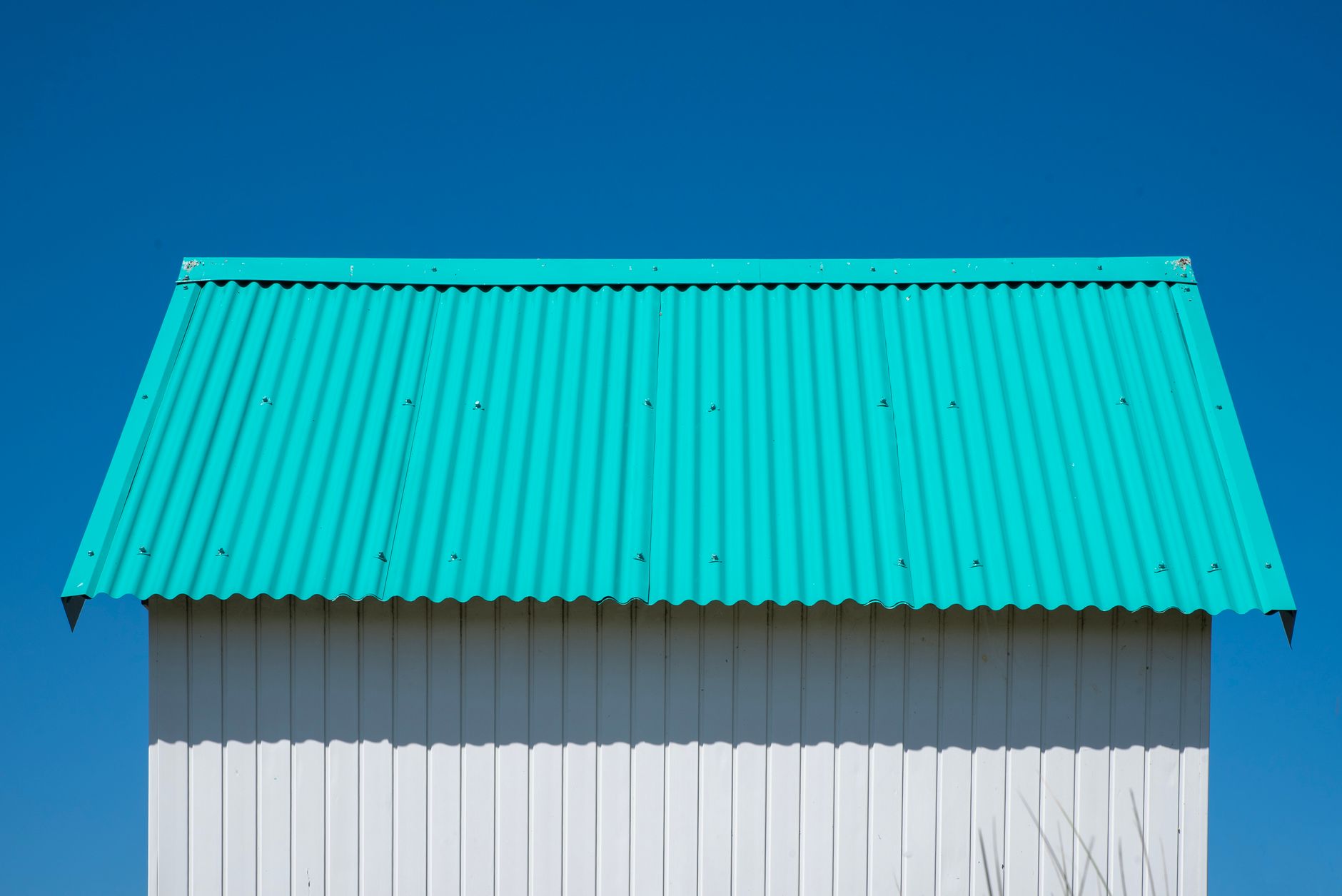
Building a 3-bedroom house in Kenya is a major milestone, and getting your roofing calculations right saves you from costly material shortages or leftover sheets. Before checking the current versatile iron sheets price in kenya, you first need to calculate your exact roof surface area and sheet lengths.
This article is part of our complete guide: Mabati in Kenya Guide.
- Standard Roof Dimensions for a 3-Bedroom Kenyan House
A typical modern 3-bedroom bungalow in Kenya has a floor plan measuring roughly 10 meters by 12 meters (120 square meters). However, your roof area is larger than your floor area because of two key factors: • Roof Pitch (Slope): A standard pitched roof adds 15% to 25% more surface area than the flat floor plan. • Eaves Overhang: Most Kenyan fundis leave a 0.6-meter (2-foot) overhang around the perimeter to protect exterior walls from rain. With a standard gable or hip roof design, your total roof surface area will usually fall between 155 and 175 square meters.
- How Many Versatile Mabati Sheets You Need
Versatile roofing sheets have an effective cover width of approximately 1 meter after accounting for side overlaps. Depending on your roof design, builders typically order sheets cut to 3 meters or 3.5 meters in length to minimize end-lap wastage. • Average Sheet Count: For a standard 3-bedroom bungalow, you will need between 55 and 65 sheets of 3-meter Versatile Mabati. • Total Linear Meters: This equals roughly 165 to 195 linear meters of roofing sheets. • Accessories Needed: Remember to budget for 12 to 15 ridge caps, valley gutters (for hip roofs), and rubber-washered roofing screws.
- Estimating Your Total Mabati Budget
At Smart Builders Africa, you can order your exact custom lengths cut to size so you do not waste money trimming offcuts on site: • Gauge 30 Versatile Mabati: Priced at KES 610 per meter, 180 meters will cost approximately KES 109,800. • Gauge 28 Versatile Mabati: Priced at KES 730 per meter, 180 meters will cost approximately KES 131,400. Both options come with a 20-year warranty and free countrywide delivery within 1 to 5 days directly to your construction site.
Get a Free Exact Roof Measurement Check
Send your architectural roof plan or fundi measurements to the Smart Builders Africa team on WhatsApp or call 0705757151. We will verify your exact sheet count before you place your order.
Start with the roof area, not the number of rooms
A three-bedroom house can be a compact 90 square metre bungalow or a sprawling 180 square metre home with a verandah, and the roof follows the footprint, not the bedroom count. So the first job is to measure the building from the outside wall to outside wall, in length and width. Add the verandah or porch if it sits under the same roof. If you have an architect's drawing, the roof plan will already show these dimensions, but it is worth confirming them against what is actually on the ground. Mistakes at this stage carry through every later step.
Each roof plane then needs its own measurement. For a gable roof there are two equal planes, and for each one you want the length along the ridge and the length down the slope. The slope length is longer than the horizontal distance from wall to ridge because the roof is tilted. As a rough guide, a 20 degree pitch makes the slope about 6 percent longer than the flat run, while a 30 degree pitch makes it about 15 percent longer. Your builder can give you the exact pitch, or you can measure the rafter directly once it is in place.
Do not forget the overhang, because it changes the sheet length and the sheet count. Most Kenyan houses carry an eaves overhang of 450 to 600 millimetres to throw rain away from the walls, and a smaller overhang of around 300 millimetres at the gable ends. Add these on every edge before you multiply anything. The shape matters too, since a simple gable and a hipped roof over the same footprint need different sheet counts. A hipped roof has four planes, with triangular and trapezoid pieces at the hips that must be cut from full sheets, so expect more cutting and more waste than on a plain gable.
Working out the sheet length and effective cover
Every sheet has a full width and an effective cover, and the second figure is the one you use for counting. The effective cover is the full width minus the side overlap where one sheet sits over the next. For many versatile and box profile sheets in Kenya, the full width is close to one metre and the effective cover falls somewhere between 0.85 and 0.9 metres. The exact figure depends on the profile, so confirm it for the specific sheet before you do any sums. If you divide by the full width instead of the effective cover, you will come up short on sheets.
Sheet length is the next decision, and the aim is for each sheet to run unbroken from the eaves to the ridge with a small overhang over the gutter or fascia. Long single sheets mean fewer joints, and fewer joints mean fewer places for water to find a way in. They also save time on the roof, because there is no second row to align. Measure the slope length including the eaves overhang, then round up to the next practical length your supplier can cut, and remember that very long sheets are harder to carry up a ladder and to transport. If the slope is too long to handle comfortably, plan for two rows with a proper end lap.
Purlin spacing does not change how many sheets fit across the width, because that is set by the effective cover. What it does affect is the strength of the roof and the number of fixings along each sheet. G28 is thicker and stiffer, so it tolerates wider purlin spacing, while G30 is lighter and generally wants purlins closer together to avoid sagging or noise in strong wind. The spacing also decides where the sheet ends and laps must land, since every join needs to fall on a purlin or rafter. Settle your purlin layout with your fundi before you finalise sheet lengths, because the two decisions depend on each other.
Allowing for overlaps, waste and cutting
Wherever two sheets meet end to end on the same slope, they need an end lap, and that lap has to fall on a purlin so the join is supported and fixed. A typical end lap is 150 millimetres or more, and on lower pitches it should be longer to stop water being driven back up the join. This means each row built from two sheets needs more total length than the slope alone suggests. If your slope is 5.3 metres and you are using two shorter sheets, you are buying extra length for every row, not just one. Single-length sheets avoid this cost entirely, which is another reason to prefer them when handling allows.
Waste comes from cutting, and the amount depends on the roof's shape. A plain gable roof with square ends produces little waste, and a margin of about 5 percent is usually enough. Valleys, hips, chimneys, dormers and awkward corners are different, because each one calls for angled cuts that leave offcuts you cannot reuse. On a roof with several of these features, a margin of 10 to 15 percent is more realistic. It is better to pay for a few extra sheets now than to wait a week for a small top-up order while your roof stays open to the weather.
Keep a few spare sheets beyond the waste allowance, because sheets get damaged long before they reach the roof. They can be bent while being offloaded, scratched when dragged across other sheets, or dented when stacked unevenly on site. Two spare sheets are a sensible minimum for a house this size, and they are also useful later if a storm or a falling branch damages the roof. Store spares flat, off the ground, and covered, so they do not warp or stain. Matching colour and finish years later can be difficult, so having a few from the original batch is a real advantage.
Ridge, valley and finishing components
The ridge is simple to calculate because its length equals the building length on that axis, plus any gable overhang at the ends. Ridge caps are sold and counted by the piece, but you should plan them in metres first. Divide the total ridge length by the usable length of one cap after allowing for the overlap between caps, which is often around 150 millimetres. If your caps are 2 metres long, each one covers about 1.85 metres of ridge. Ask your supplier for the exact length of the caps they stock, because it varies between profiles and manufacturers.
Roll caps finish the edges of the roof, and you count them the same way, by converting a length in metres into a number of pieces. On a gable roof, roll caps normally run up the sloping gable edges, and if you have no gutter or fascia, they can also trim the eaves. Add up the length of every edge you want to cover, divide by the usable length of one roll cap, and round up. Corners and joins need a little extra, so a spare piece or two is cheap insurance. A neat roll cap also protects the cut edges of the sheets from wind-driven rain, which helps the roof last longer.
Fasteners are where many first-time builders under-order. The right count depends on the number of purlin contacts per sheet, because each sheet needs fixing at every purlin it crosses, and usually at several points across its width at the eaves and ridge. Multiply the contacts per sheet by the fixings per contact to get a figure per sheet, then multiply by the number of sheets laid. Add around 10 percent for lost, dropped or badly driven fasteners. Use roofing screws with proper sealing washers designed for mabati, since nails or mismatched screws lead to leaks and loosened sheets over time.
A worked example of mabati sheets for 3 bedroom house and when to ask for a second check
Take a typical three-bedroom bungalow measuring 12 metres long by 9 metres wide, with a simple gable roof at 20 degrees. The ridge runs along the 12 metre length, so each side of the roof covers half the width, or 4.5 metres, plus a 0.45 metre eaves overhang. That gives a horizontal run of 4.95 metres, and dividing by the cosine of 20 degrees, which is about 0.94, gives a slope length of roughly 5.27 metres. This agrees with the rule of thumb that a 20 degree pitch adds about 6 percent to the flat run. Rounding up, you would ask your supplier for sheets of about 5.3 metres, or plan two rows with an end lap if that length is too hard to handle.
Across the ridge, add a gable overhang of about 0.3 metres at each end, which makes the roof 12.6 metres long. Divided by an effective cover of 0.9 metres, that is 14 sheets per side, and at an effective cover of 0.85 metres it comes to just under 15, so you round up to 15. The house therefore needs between 28 and 30 sheets for the two planes. Adding a 5 percent waste margin for a plain gable brings the figure to about 30 to 32 sheets, and two spares take it to between 32 and 34. Your own number will depend on the effective cover of the exact profile you choose, so confirm it before you order.
The finishing pieces follow the same logic. The 12.6 metre ridge divided by 1.85 metres of usable length per 2 metre cap comes to about 6.8, so you would order 7 ridge caps and add a spare. The four sloping gable edges, each about 5.27 metres, add up to roughly 21 metres, which needs about 12 roll caps of the same size once rounded up. Fasteners can only be counted once the purlin layout is fixed, because the number of contacts per sheet comes from it. Work that figure out with your fundi, then add the 10 percent allowance for losses.
It is wise to ask for a second check whenever your roof is more complicated than this example. A hipped roof, valleys, dormers or a chimney will all push the waste margin well above 5 percent, and a quote that ignores them may leave you short. The same applies if a quote differs from your own count by more than the waste and spare allowance can explain. Take your measurements, pitch, chosen profile and gauge to your supplier and your builder, and ask each of them to check the list against the roof plan. A few minutes of comparison before you buy is far cheaper than a delayed roof or a pile of unused sheets.
Get the best roofing sheets prices in Kenya
Best Mabati Prices →